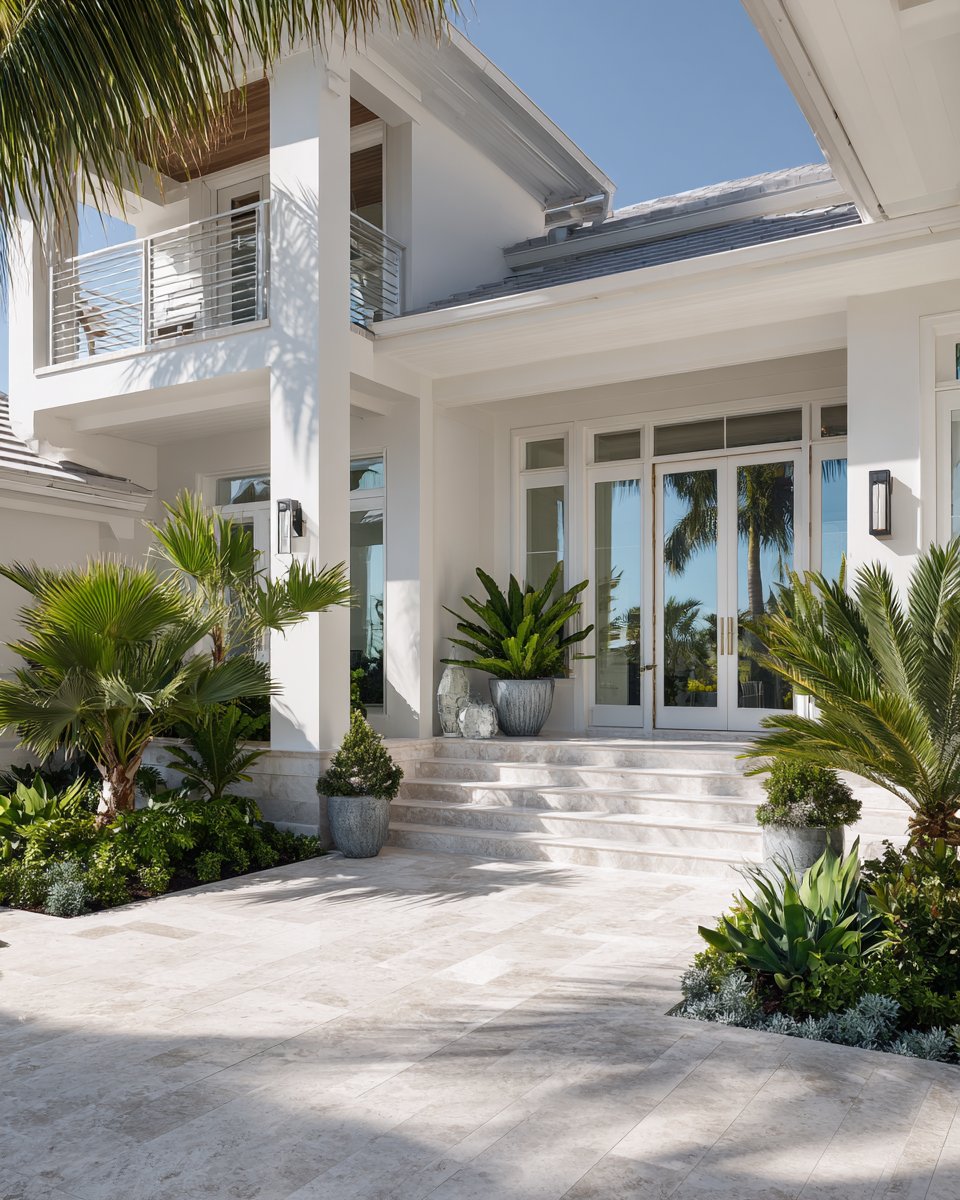
A storefront on Worth Avenue recently needed a full hearing before the Town's Architectural Commission to add signage, a new entry door, and awnings. Not a new building. Not a structural change. An awning. The application was deferred to the commission's next meeting, joining new single-family projects on the same agenda. On Palm Beach Island, a canvas overhang gets the same procedural weight as a roofline.
That detail matters if you are buying here with a renovation in mind, because it tells you something the listing price never will: the clock on your project does not start when the contractors show up. It starts with a commission of volunteer citizens deciding whether your plans are appropriate to the block, and that review runs on its own schedule, independent of your closing date, your architect's availability, or how much you are prepared to spend.
What the Timeline Actually Stacks Up To
A new single-family permit review on the island typically runs 12 to 20 weeks on its own, before a shovel touches the ground. Layer the Architectural Commission's review on top, and add another 6 to 12 weeks, assuming your preliminary submission clears without a remand back to the drawing board. If your parcel sits on the water, add Florida's Coastal Construction Control Line review, which on Palm Beach Island runs in series with the architectural review rather than alongside it, adding another 3 to 5 months of idle time before permits issue at all.
| Review Stage | Typical Duration | Runs In Series or Parallel |
|---|---|---|
| Base permit review | 12–20 weeks | Baseline |
| Architectural Commission (ARCOM) | +6–12 weeks | Must clear before permit review advances |
| Coastal Construction Control Line (oceanfront only) | +3–5 months | Series, not parallel, on the island |
Stack those together on a waterfront parcel and you can be a year into a project before construction begins, on paper doing everything right. At any given time, roughly 80 new or substantial single-family projects are moving through this process on the island. Fewer than half deliver on the timeline the owner had in mind when they signed the contract. That review time can affect carrying costs, so buyers should account for it alongside their construction budget.
A Bungalow on Chilean Avenue Just Proved the Point
In May, the Town Council voted to designate a century-old bungalow at 141 Chilean Avenue as a landmark, over the owner's formal objection. The corporation that had held the property for roughly three decades argued through counsel that the house did not meet the ordinance's criteria for historical significance or architectural distinction. The council disagreed. The vote was tied 2 to 2 before Mayor Danielle Moore broke the deadlock in favor of designation.
This is worth sitting with, because the property in question was not a $30 million oceanfront trophy. It was an ordinary house on an interior street, and it still ended up subject to Landmarks Preservation Commission review for any future exterior change visible from the street, regardless of whether the owner wanted the designation. Under the town's ordinance, owner opposition does not prevent it. If you are shopping for a smaller renovation project on the island because you assume a modest property carries less regulatory exposure than an estate, the Chilean Avenue case says otherwise. More than 328 landmark properties, sites, and vistas are currently protected under the town's Historic Preservation Ordinance, and the commission that oversees them meets monthly to add more.
For historic-district or landmarked properties, that math gets worse before it gets better. Renovations on these properties tend to run 15 to 30 percent higher than comparable work on non-historic homes, with two to six month timeline extensions common. On a multi-million dollar interior update, that is not a rounding error. It is a line item nobody put in the offer, because the offer was built around the purchase price, not the review calendar.
The commission itself is not adversarial by design. The Town of Palm Beach says the commission's members are Town-registered voters, at least two of whom must be licensed architects, reviewing projects against a stated standard that "the essential foundation of beauty in communities is harmony." That standard is subjective by nature, which is precisely why timelines vary so widely between two projects that look similar on paper.
The One Conversation Most Buyers Skip
There is a lever available to buyers that almost nobody uses: a pre-application conversation with Town planning staff before the parcel is under contract, let alone before it closes. The overlay rules do not change based on who owns the property, so this will not get you a different outcome than any other applicant. What it can do is let staff informally preview a scheme, flag whether your target property carries historic-district exposure you were not aware of, and surface likely objections before you have signed anything.
That conversation requires knowing which questions Town staff will actually answer informally, and that is not something you learn from a listing sheet. It is the kind of detail that separates a buyer who finds out about ARCOM exposure at contract signing from one who finds out about it while still deciding which properties to tour.
Not Every Block Carries the Same Weight
The review environment is not uniform across the island, and that matters when you are comparing two properties at similar price points. Much of Midtown, the Sea Street area, and the El Brillo corridor in the South End sit inside a historic district, which layers Landmarks Preservation Commission review under Chapter 54 of the Town Code on top of the standard architectural review. The North End carries its own overlay pockets, though it is generally a looser review environment, with massing constraints on smaller lots as the more common friction point. Waterfront parcels along South Ocean Boulevard add the Coastal Construction Control Line process to an already dense review stack, regardless of whether the house itself is historic.
None of this shows up in a comparative market analysis built from closed sale prices. It shows up when you ask a specific question about a specific address before you write an offer, which is the only point in the process where the answer can still change your decision instead of just your timeline.
A Few Questions Worth Asking Before You Sign
Does landmark designation only apply to large oceanfront estates? No. The Chilean Avenue bungalow shows that a modest, interior-lot property can be designated over an owner's objection, and the town's ordinance does not require owner consent.
Is there a way to reduce timeline risk before I own the property? Request a pre-application conversation with the Town's planning staff before signing a contract. It will not change the rules that apply to you, but it can surface historic-district exposure and likely objections while you still have the option to walk away or adjust the offer.
If you are weighing a Palm Beach Island property with renovation plans attached to it, the purchase price is the easy number to compare. The review calendar is the one that actually determines when you move in and what the project costs you while you wait. South Florida Luxe Life works through that calendar with buyers before an offer goes in, not after. Schedule Your Free Consultation to talk through what a specific address on the island would actually require.
This article is general information, not legal, tax or financial advice. Consult a qualified professional about your situation.